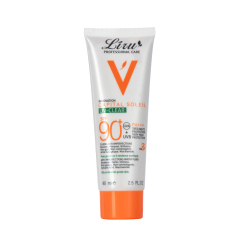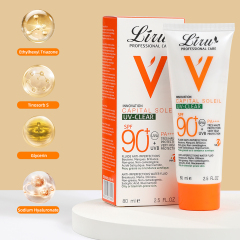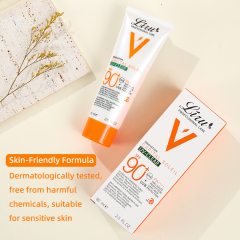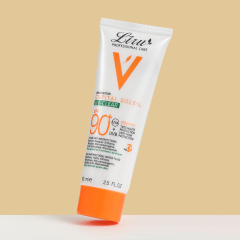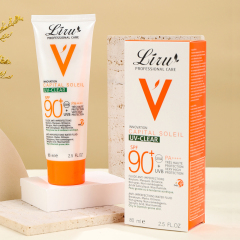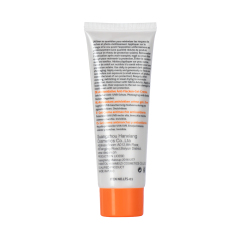
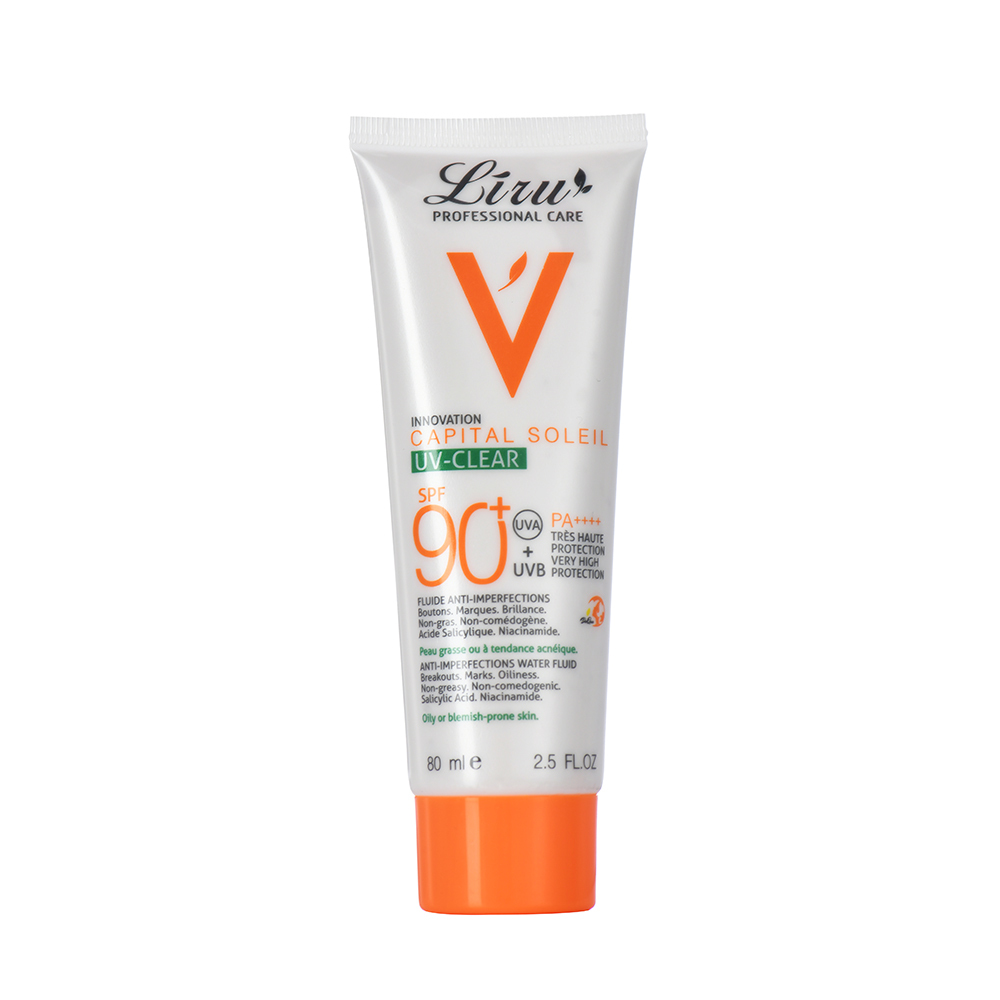
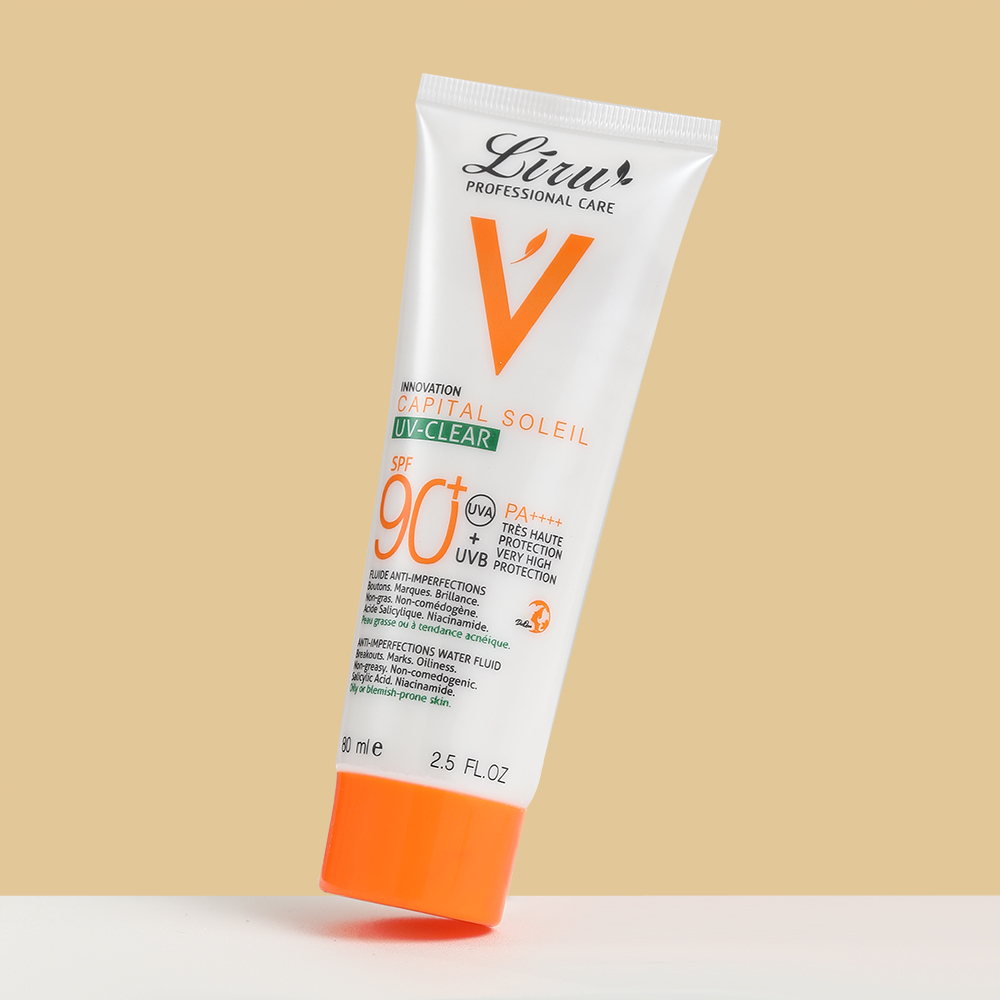
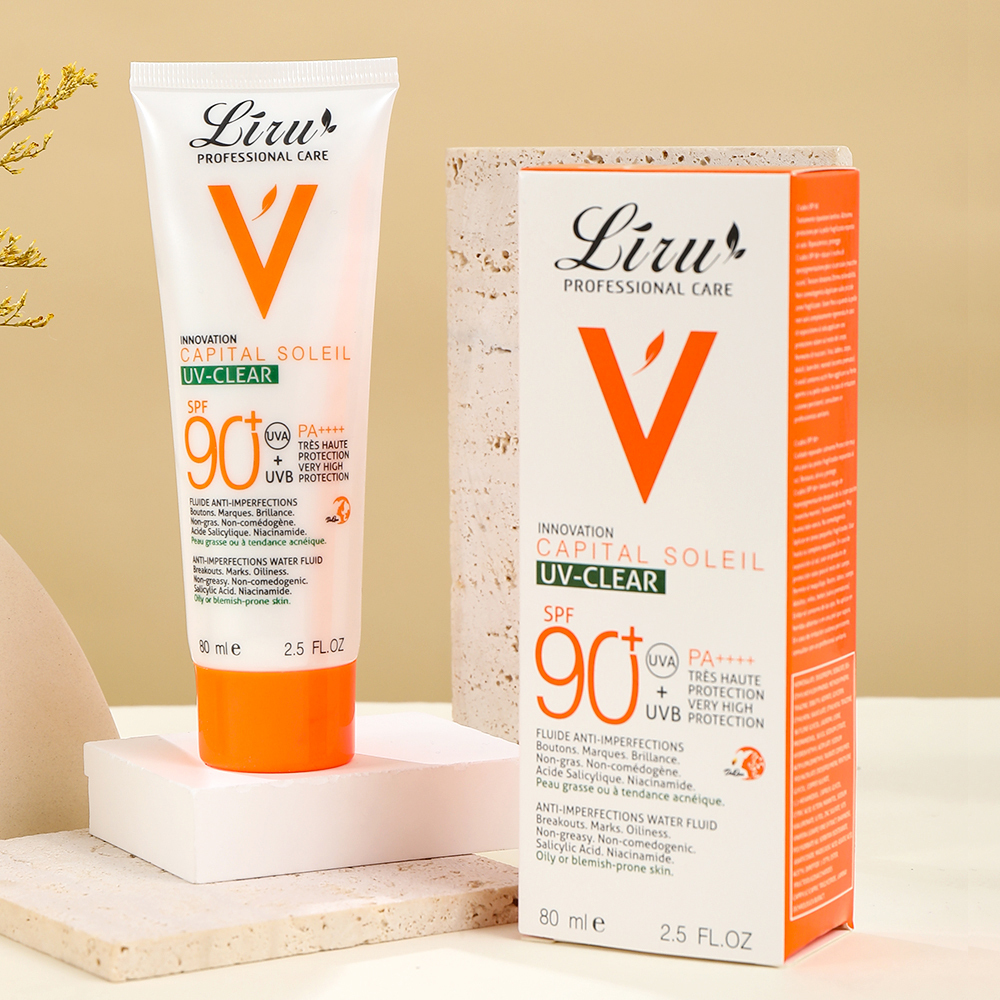
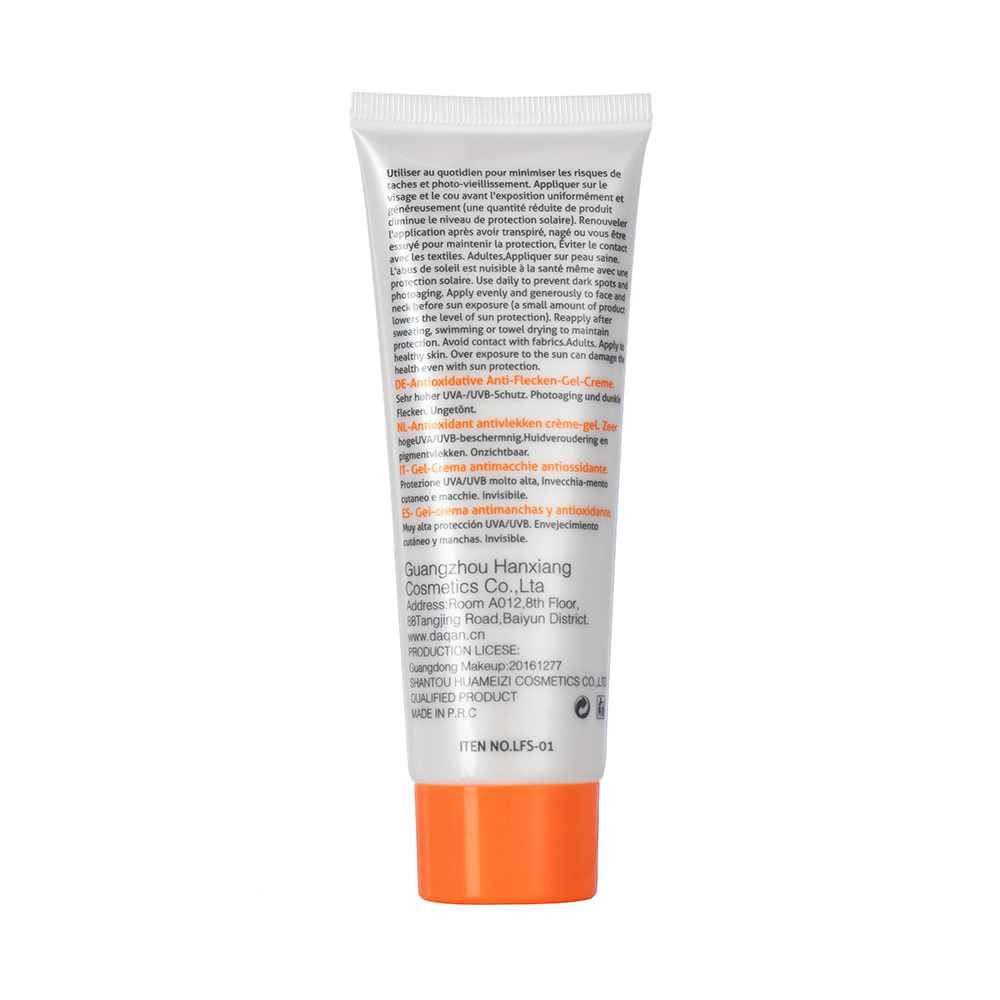
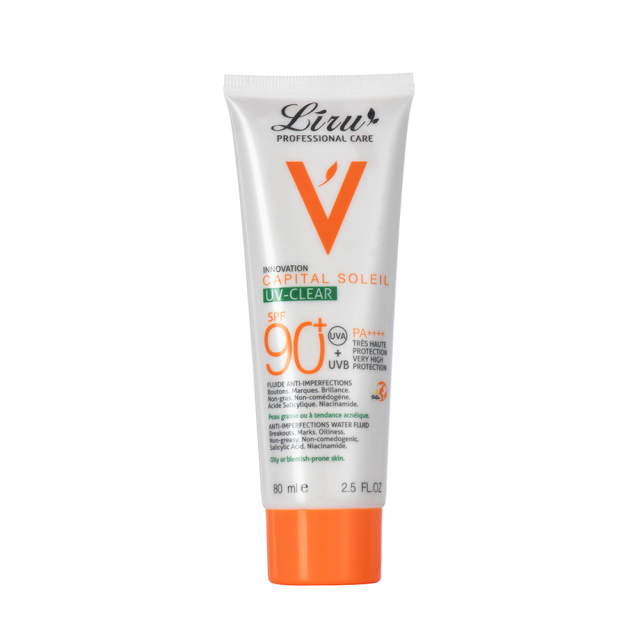
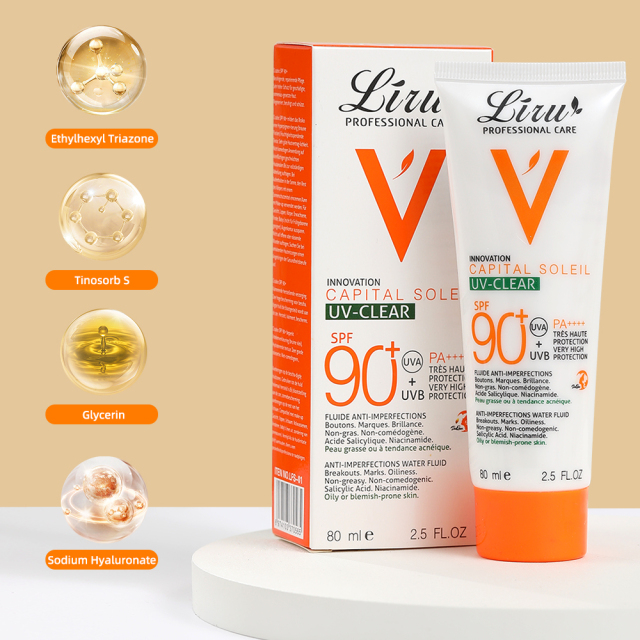
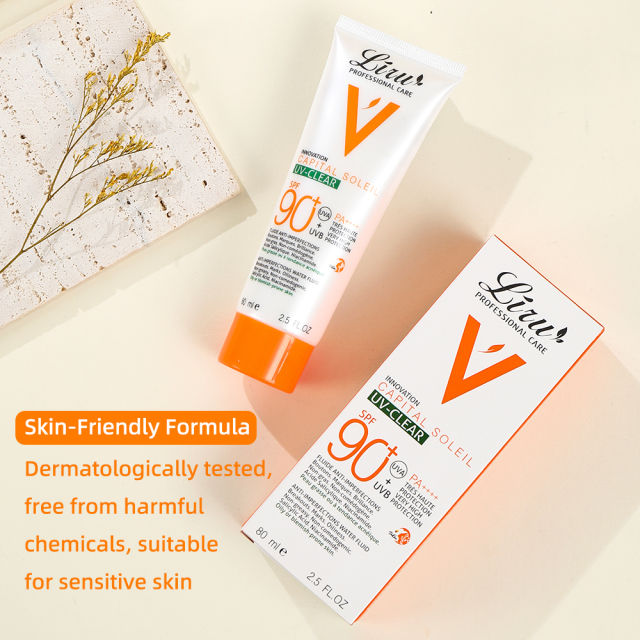
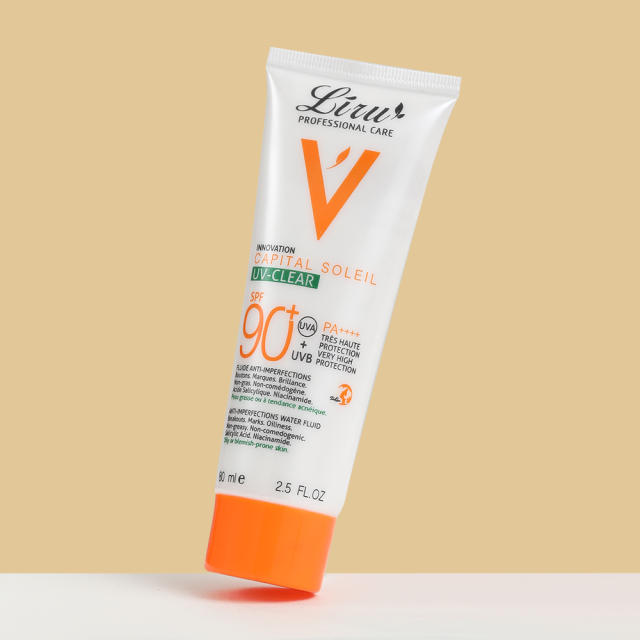
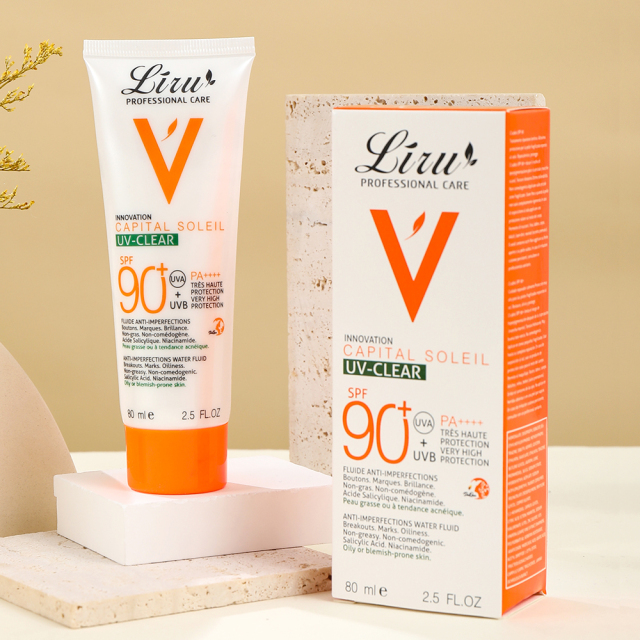
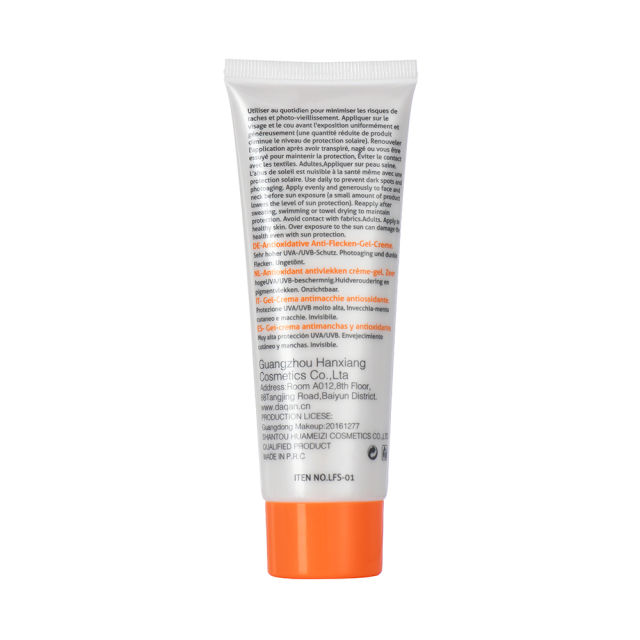
Liru Anti-Oxidation Sun Protection Body Face Sunscreen SPF 90 is a lightweight cream built to cover the face and the body in one step. The SPF 90 sunscreen rating is the level brands ask for when a range needs a daily product for strong sun, long commutes, outdoor work and hours on the water — not only for a week at the beach.
Most very-high-protection products are built for the face and stop there. This one is meant for the places people actually burn: cheekbones, ears, the hairline, the neck, shoulders, forearms and the backs of the hands.
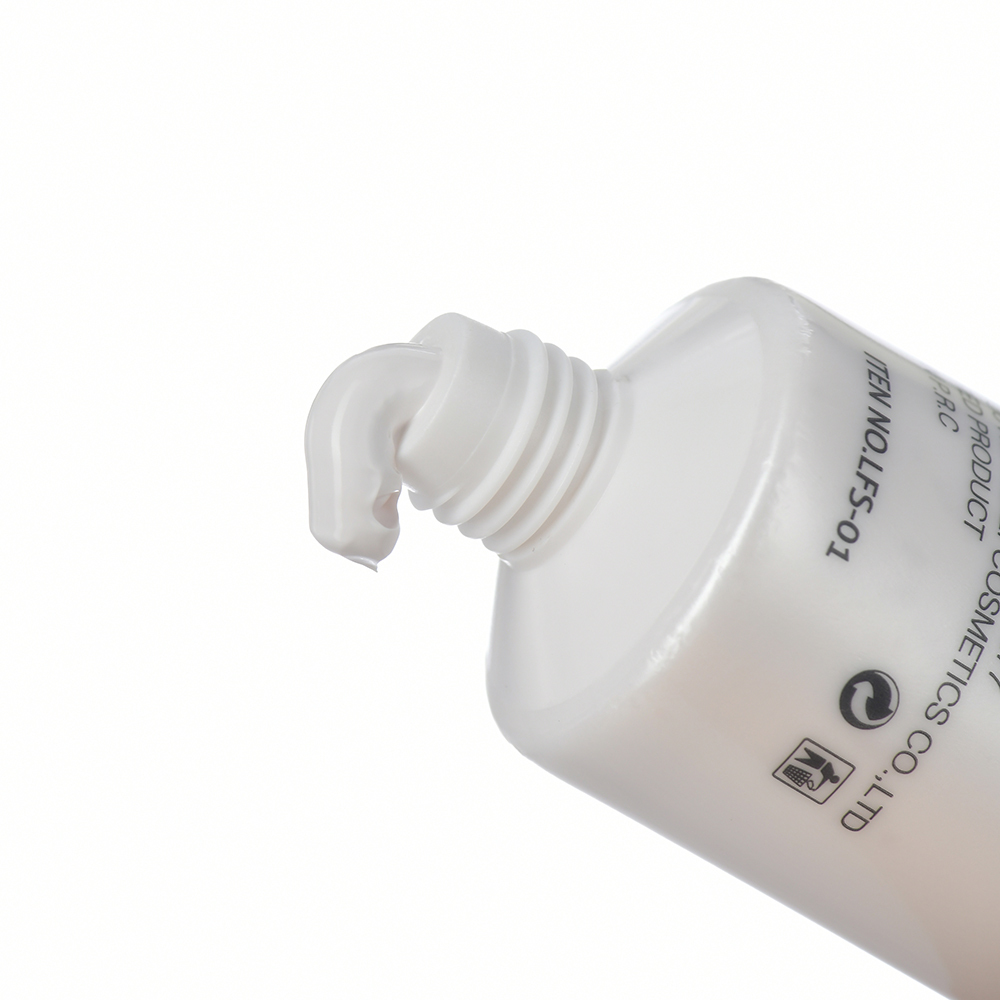
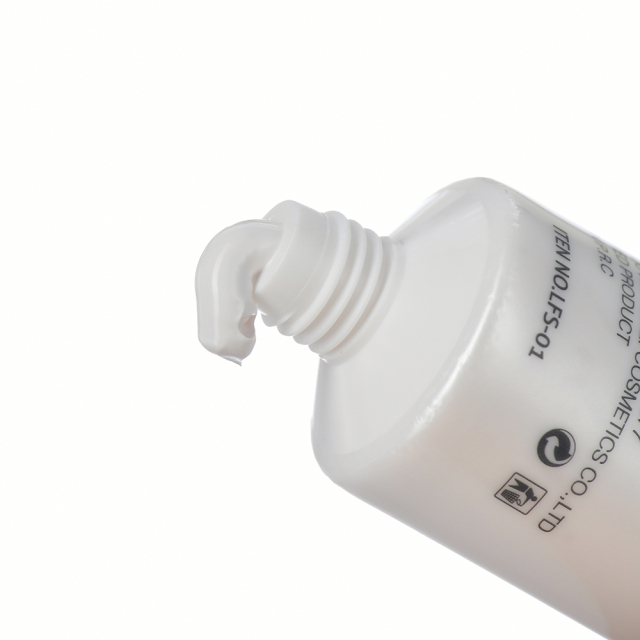
The sunscreen cream stays light and non-greasy. It sits under makeup, can be reapplied through the day and spreads over the body without leaving skin coated or tacky.
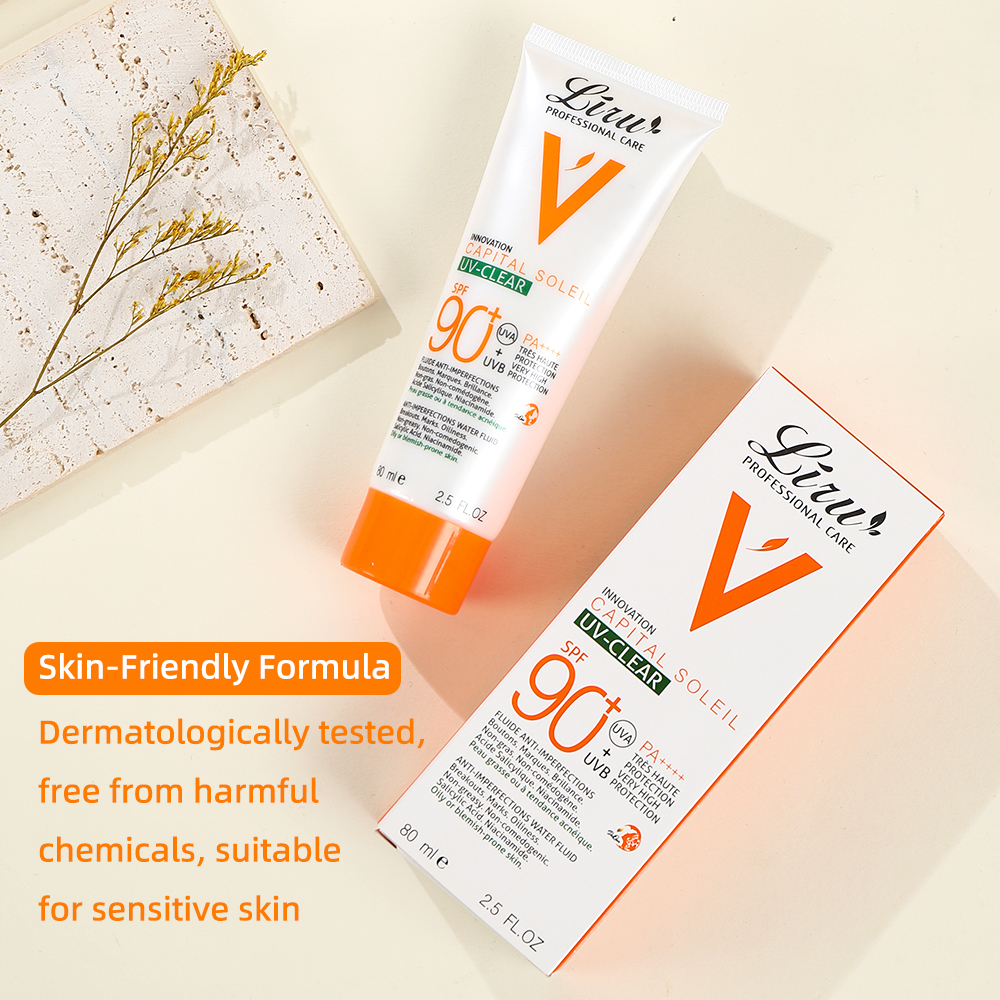
It is also mild enough for delicate areas, including the thin skin around the eyes, where many high-SPF products sting or migrate. Applied sparingly along the orbital bone it gives everyday cover to an area most people leave unprotected.
Anti-oxidation refers to the long game: daily defence against the environmental stress behind photoaging — fine lines, uneven tone and dark patches that build over years of unprotected sun. Sodium hyaluronate, asiaticoside and madecassic acid keep the finish comfortable, so skin feels hydrated rather than tight once it dries.
It is produced in Guangzhou by a private label skincare manufacturer that supplies distributors and brand owners, and it can be ordered under the Liru name or built around your own.
- Broad-spectrum SPF 90 cover: the filter system works against UVB, the rays that burn, and UVA, the rays behind tanning and long-term photoaging, so one product covers a commute and a full afternoon outdoors. - Made for delicate ground: the skin around the eyes, the tops of the ears and the hairline burn first and are usually the last places anyone applies anything. This sunscreen cream can go on all three without the sting that sends wearers back to a lower SPF. - A finish people will tolerate daily: it spreads easily, settles without a heavy film and layers under foundation — which is what decides whether a tube gets finished or forgotten. - Face and body from one 80 ml tube: fewer products on the shelf, a simpler routine for the person using it, and one sunscreen to reorder instead of two. - Comfort built into the base: hydration and soothing actives are part of the formula, so skin does not feel stripped or tight by the end of a long day outside. - A story that fits a modern sun-care range: anti-oxidation and daily photoaging prevention give the product a reason to stay on shelf outside the summer months.
| Ingredient | Role in the formula |
| Titanium Dioxide | Mineral filter that stays on the skin surface and blocks UVB and short-wave UVA |
| Zinc Oxide | Second mineral filter, widening UVA coverage and keeping the formula mild on reactive skin |
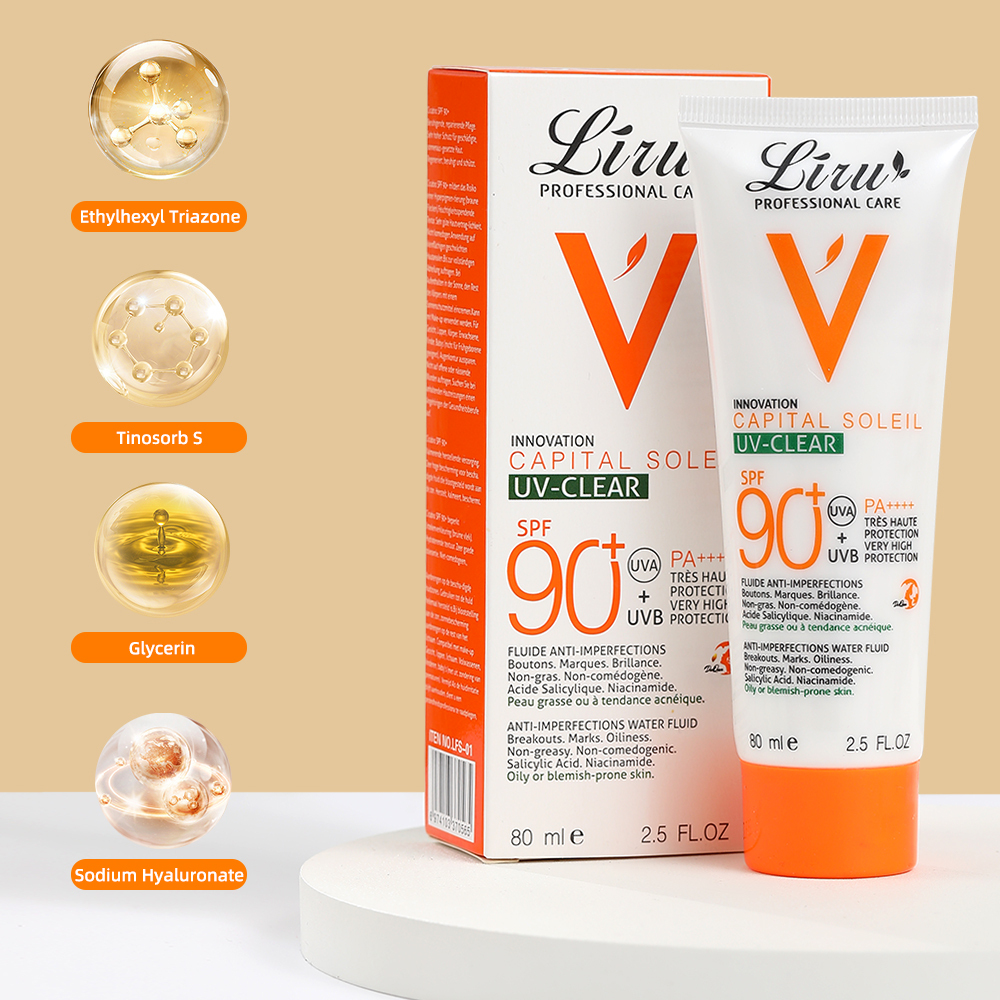
| Bis-Ethylhexyloxyphenol Methoxyphenyl Triazine | Photostable organic filter covering both UVA and UVB |
| Ethylhexyl Salicylate | Organic UVB filter that carries part of the overall SPF |
| Diisopropyl Sebacate | Light emollient that gives the cream its dry, spreadable feel |
| Dibutyl Adipate | Solvent for the organic filters; helps the cream absorb without a greasy layer |
| Sodium Hyaluronate | Humectant that holds water in the upper skin layers so the finish stays comfortable |
| Asiaticoside | Centella-derived soothing active |
| Madecassic Acid | Centella-derived active that supports skin comfort during long exposure |
The simplest way to sell this sunscreen cream is as the sun step of a morning routine: on the face after serum and before makeup, then carried down the neck and arms on the way out of the door. That is the use most brands build a listing around, and it is where a light texture earns its keep.
It also fits people who are outside by profession rather than by choice — drivers with one arm in the window, site workers, market traders, delivery riders. For them the body half matters as much as the face half, and a cream that spreads over forearms and hands in seconds gets used again; a thick one does not.
Holiday and water use is the obvious third case. The formula stays comfortable through a day at the beach and goes back on easily, which matters because the weakest point of any sun product is how willing people are to reapply it.
Sensitive areas are the fourth. Around the eyes, on the ears and along the hairline the skin is thin and usually first to burn — and it is the area most people skip because ordinary high-SPF products sting there.
Some buyers stock it for sun-reactive skin: people whose skin flares after sun exposure, including those taking medication that increases photosensitivity, people with photodermatosis, and melasma-prone or oily skin where daily protection does most of the long-term work. Keep your wording cosmetic — this is protective daily care, not a treatment.
On shelf it suits pharmacies and beauty counters where staff advise on sun care, and private label sunscreen ranges that want a face-and-body hero instead of two separate listings.
It is also the quicker route for brands that want a custom sunscreen under their own name but would rather start from a tested formula than from a blank page.
| Product name | Liru Anti-Oxidation Sun Protection Body Face Sunscreen SPF 90 |
| Brand | Liru |
| Product number | LFS-01 |
| Volume | 80 ml |
| Protection | SPF 90, broad-spectrum UVA and UVB |
| Format | Lightweight sunscreen cream |
| Use area | Face and body, including the skin around the eyes |
| Key filters | Titanium Dioxide, Zinc Oxide, Bis-Ethylhexyloxyphenol Methoxyphenyl Triazine, Ethylhexyl Salicylate |
| Supporting ingredients | Sodium Hyaluronate, Asiaticoside, Madecassic Acid |
| Skin suitability | Daily use on all skin types, including oily and sensitive skin |
| Functions | Moisturizing, sun protection, anti-UV, brightening |
| Finish | Non-greasy, comfortable wear |
Most of what a private label sunscreen needs is settled before artwork: which formula, which protection level, which pack. Here the formula is the fixed part. SPF 90 with this mineral and organic filter blend carries its own test basis, so a different SPF, a different filter story or a noticeably different texture is a separate custom sunscreen brief rather than a label change.
The presentation is where you have room. Tube and cap, carton, brand name, artwork, languages, ingredient list and the claims your market allows can all be built around your brand rather than ours. Buyers comparing sunscreen manufacturers usually want to know exactly where that line falls — on this product the pack is yours and the formula is ours.
A brief that moves without delays usually answers five questions up front: the target market, because sunscreen is regulated differently in every one; the channel, whether pharmacy, beauty specialty stores, e-commerce or professional; the pack format and size; the languages needed on pack; and whether you want a fragrance or a particular skin feel. Those five decide most of the rest, including how much testing your version needs.
If your catalogue already carries a Daqan high protection SPF90 sunscreen, this formula sits beside it rather than repeating it: that one is a face cream built around titanium dioxide and a brightening story, while this is a body-and-face product with a mineral-plus-organic system and a sensitive-area angle. Many distributors list both.
As a private label skincare manufacturer we run this as a standard project — your packaging and artwork, our formula and paperwork — and we will say plainly when a request needs new testing instead of a new label.
Titanium dioxide and zinc oxide are the two filters most often linked to a visible cast, and this sunscreen cream carries both alongside an organic filter system. At SPF 90 the pigment load is not small, so the straight answer is this: on light to medium skin it blends in, and on deeper skin tones a cast is possible if it goes on in one heavy layer. Better that you hear it from us than from a customer's first review. Why the cast shows up at all: mineral filters sit on the surface and scatter visible light instead of absorbing it. That is exactly what makes them mild on reactive skin, and exactly what makes them visible. The loading needed to reach a very high protection level is what you are seeing, not a fault in the batch. How to apply it on deeper tones: spread it in thin passes rather than one thick smear, let each pass settle for about a minute, and build up to the amount the pack calls for. Work the edges properly — hairline, jawline, ears and the nape, where an unblended line is most obvious. On the body it reads least on the arms and most on the backs of the hands. What to check before a launch: put the finished pack on a panel that includes deeper skin tones and look at it in daylight, not under shop lighting. Ask us for samples before you commit a full run; a panel of five tells you whether the finish suits the market you are selling into. If your market needs an invisible finish: a tinted version, or a different mineral-to-organic ratio, is a separate custom sunscreen brief with its own testing — not a label change. Tell us the market and the finish you want and we will say plainly whether it is a reformulation or a shade addition. On pack: describe the finish honestly for the skin tones you are selling to. For a private label sunscreen aimed at deeper tones, a tinted base or a light setting powder over the top is what most wearers reach for, and saying so costs nothing while a claim of an invisible finish costs you returns.
Guangzhou EmbAroma Cosmetics Co., Ltd. has manufactured skincare in Baiyun District, Guangzhou since 2006, with an 8-person office team and 90+ factory staff supplying distributors and private-label brands in more than 50 countries. Our OEM/ODM service covers custom formulations and flexible packaging, backed by strict quality control on every batch and formulations developed to meet the regulatory requirements of the US, EU and Asian markets. Low minimums, a streamlined supply chain and regular production updates keep your orders moving from first sample to shipment.